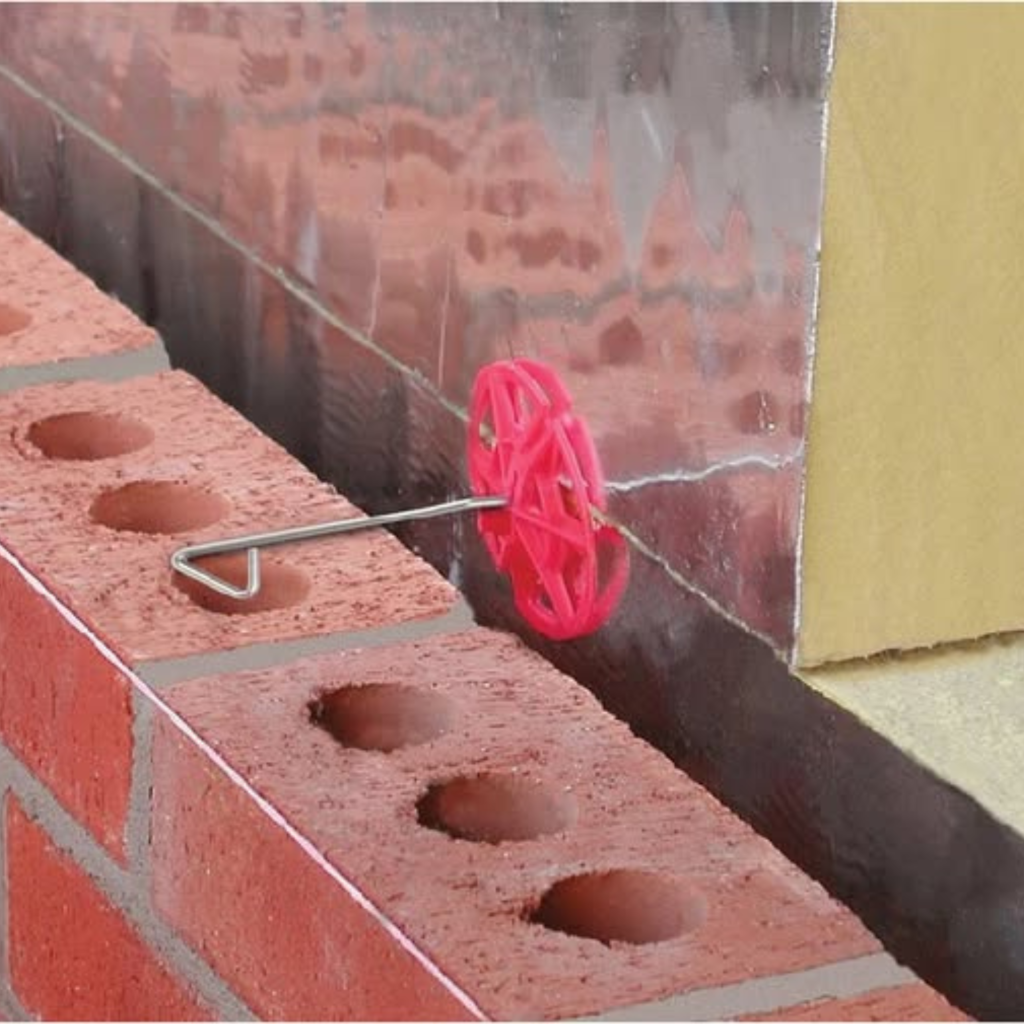

How lateral stability is maintained in cavity wall construction
Wall Ties Are Structural Ligaments
In cavity wall construction, wall ties function like ligaments in the human body connecting two systems so they move together without separation.
Originally made from wrought iron, many early ties have since succumbed to corrosion-induced expansion, often increasing in diameter by up to 700 percent. This expansion does not just weaken the tie. It cracks the masonry from the inside out.
What to know:
- Wall ties transfer lateral wind loads from the veneer to the backup wall.
- Proper embedment depth usually 1.5 inches into mortar joints and spacing commonly 16 inches by 24 inches are critical for performance.
- Stainless steel ties ASTM A580 Type 304 or 316 are now preferred for longevity in high-exposure zones.
- Wall ties typically fail due to corrosion.
Restoration is not complete until lateral stability is verified. And that begins with listening to what the wall is trying to pull apart.