
Verification protocols that protect building envelope performance
Why Field Testing Is Critical for Fluid-Applied Air Barriers
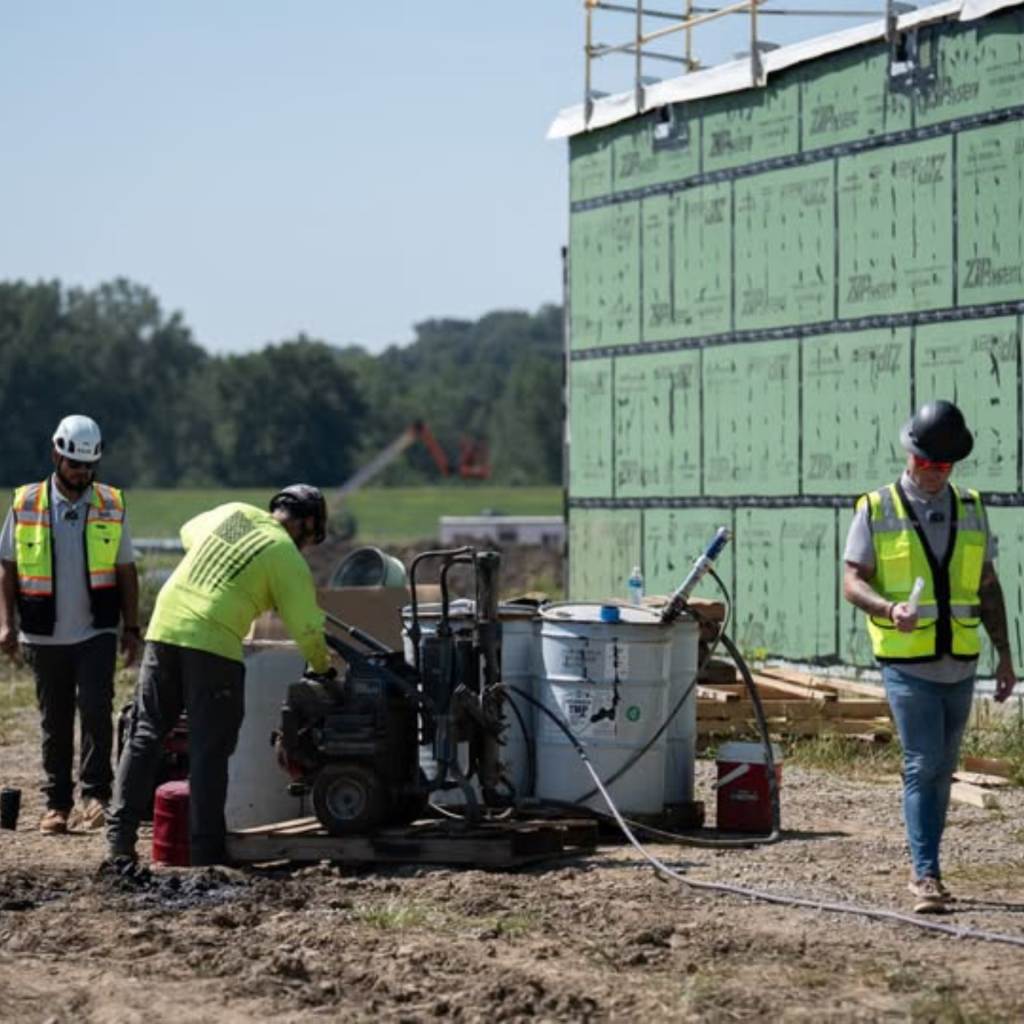
A fluid-applied air barrier only performs if it is continuous, bonded, and installed under the right conditions.
At GKW Restoration, field testing is standard procedure. We do not guess. We verify.
Here is how we test every system:
- Wet Film Thickness Testing
During application, we use wet film thickness gauges to confirm product coverage. The required thickness varies by product but is always critical to performance. - Adhesion Pull-Off Testing
After curing, we perform adhesion tests to measure bond strength to the substrate. This helps us identify weak spots early and confirm that primer and surface prep were effective. - Compatibility Checks
We test interface conditions between air barrier and other materials, such as flashing membranes, sealants, and insulation adhesives. Incompatibility leads to delamination and leaks. - Cure Timing and Climate Monitoring
Air temperature, humidity, and dew point all affect curing. We monitor site conditions and adjust schedules accordingly to avoid premature failure or soft curing.
At GKW, performance is not a hope. It is a process.
We treat air barriers as engineered systems that demand precision. Because when the membrane fails, the wall fails with it.