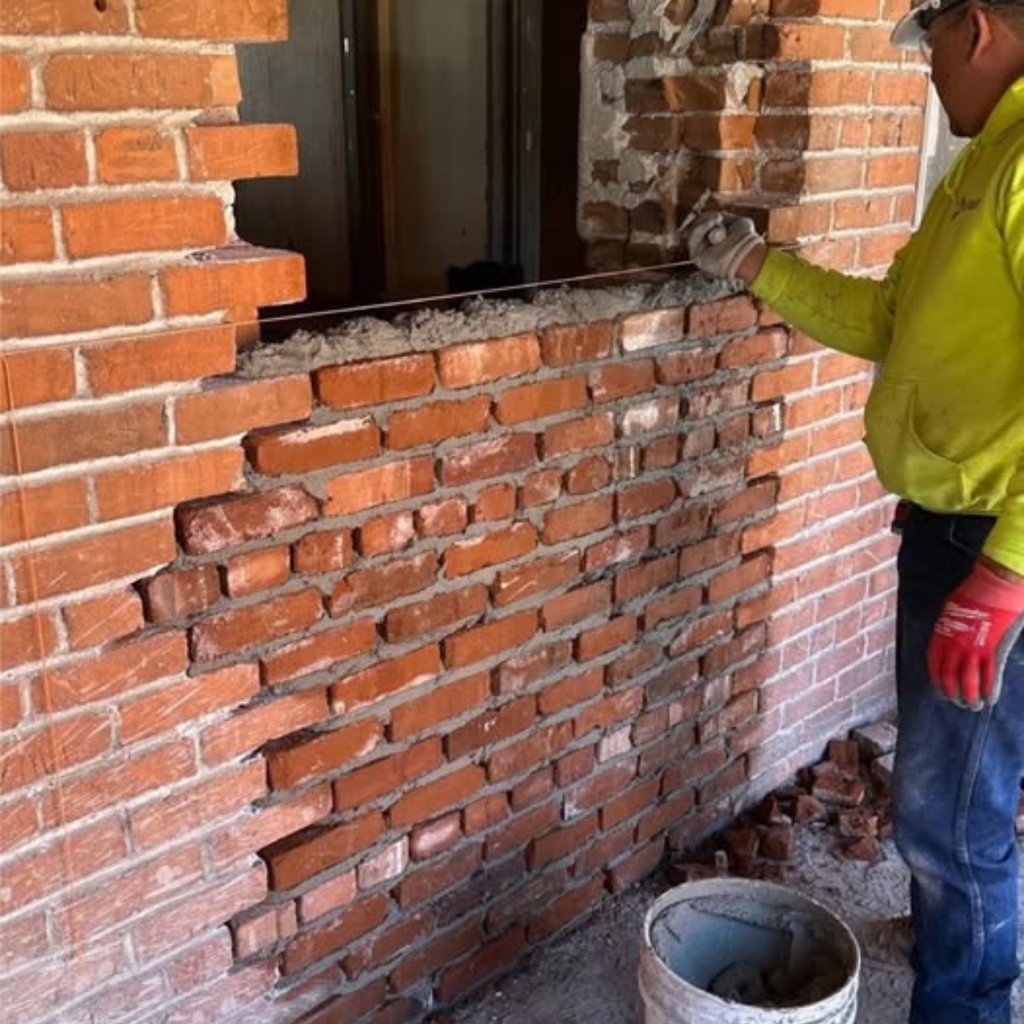

Moisture Transport Mechanisms and Deterioration in Masonry
Masonry Moisture Transport — Capillarity, Vapor Drive, and Salt Crystallization
Masonry is a porous system that absorbs, transmits, and stores moisture. Three interrelated mechanisms govern deterioration from water exposure.
Mechanisms of Deterioration
Capillary suction draws liquid water through microscopic pores.
Vapor transmission moves moisture via pressure differentials across wall sections.
Dissolved salts crystallize as water evaporates, generating internal pressure.
Analytical and Remedial Process
Measure absorption rates using Karsten tubes.
Map moisture migration with infrared thermography.
Apply breathable water repellents to reduce capillarity.
Repoint selectively with low-absorption mortar.
Integrate flashing and venting systems to manage vapor.
Moisture damage is a dynamic problem. We address the underlying physics—not just the visible symptoms.